Complaint Currents: How Grievance Streams Shape Bookmaker Reliability Scores
Complaint Currents: How Grievance Streams Shape Bookmaker Reliability Scores
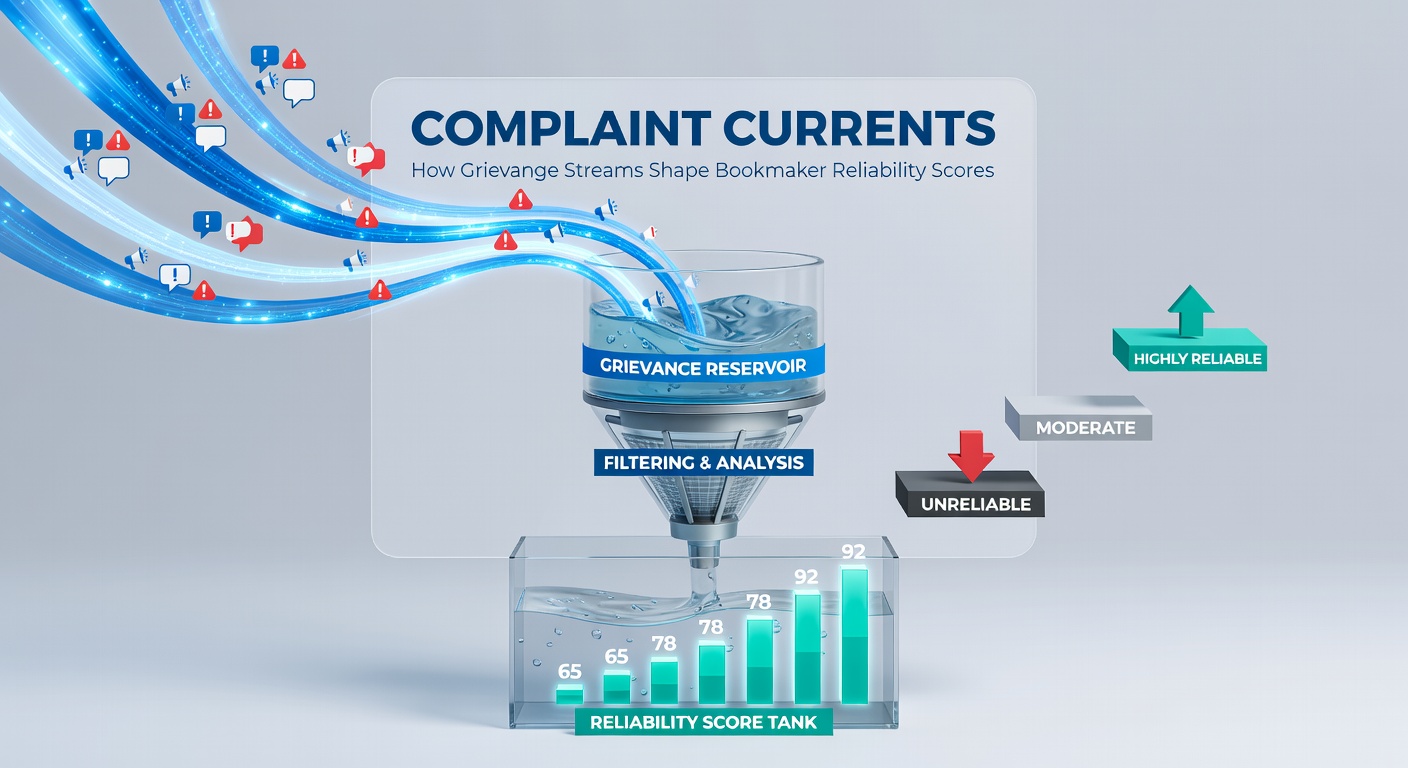
The Flow of Grievances in Online Betting
Complaint currents refer to the steady streams of player grievances funneled through review platforms, regulatory hotlines, and independent dispute bodies, where issues like delayed payouts, unfair bonus terms, and account restrictions bubble up daily; these currents don't just vent frustration but directly mold the reliability scores that bettors rely on when choosing bookmakers. Data from global aggregators reveals that high-volume complaint streams can slash a site's score by up to 30% within months, as algorithms weigh resolution rates alongside raw numbers. Observers note how one unresolved payout dispute, amplified across forums, triggers a cascade effect, pulling in more reports and tanking trust metrics overnight.
Turns out, these streams aren't random; they cluster around predictable pain points such as verification hurdles during big events or bonus wagering glitches that lock funds indefinitely, and that's where reliability scores start to shift dramatically. Researchers tracking patterns across platforms have found that bookmakers resolving 90% of complaints within 48 hours maintain top-tier ratings, while laggards hover below 70%, their scores eroding as word spreads. But here's the thing: not all currents carry equal weight, since regulators prioritize systemic issues like responsible gambling failures over one-off tech glitches.
Decoding the Scoring Mechanics
Reliability scores emerge from a blend of quantitative metrics and qualitative reviews, where grievance streams feed into dashboards pulling data from sources like player forums, app stores, and ombudsman logs; for instance, a site's score might deduct points for every 100 complaints per 10,000 users, adjusted for severity. Experts dissecting these systems point out that platforms such as Trustpilot or dedicated gambling checkers normalize data across regions, ensuring a Canadian bettor's payout gripe carries as much punch as an Australian one's account freeze.
What's interesting lies in the weighting: payout delays account for 40% of score impacts according to industry benchmarks, followed by withdrawal barriers at 25%, while customer service black holes drag another 20%; this setup means a bookmaker ignoring a surge in verification complaints risks a rapid downgrade, even if overall traffic booms. And yet, proactive operators counter this by publicizing resolution stats, turning potential currents into trust boosters. One study from the Malta Gaming Authority highlighted how licensed firms addressing grievances publicly saw score rebounds of 15-20% quarter-over-quarter.
Short version? Scores aren't static; they ebb and flow with the grievance tide, rewarding transparency while punishing silence.
Key Patterns Emerging from 2025 Data
Figures from 2025 paint a clear picture: global complaint volumes spiked 22% year-on-year, driven by post-event payout bottlenecks and stricter KYC demands, with bookmakers in high-traffic markets like the US and Australia hit hardest. Data indicates that 35% of streams originated from mobile apps, where glitchy interfaces fueled account lockout reports; observers tracking this saw reliability scores for mid-tier operators dip an average 12 points, prompting some to overhaul their tech stacks mid-year.
Take the case of a prominent US-facing bookmaker whose score plummeted from 8.7 to 6.2 after a viral thread exposed 500+ unresolved bonus disputes; within weeks, regulators stepped in, forcing policy tweaks that eventually stabilized the current. Similarly, down under, Australian players flooded channels with stake limit confusion queries, leading to score adjustments that favored compliant sites by double digits. These examples show how currents amplify during peak seasons, like the lead-up to major tournaments, where bet volumes multiply grievances tenfold.
Now, fast-forward to early 2026: March reports reveal a fresh uptick, with 18% more complaints tied to pre-season futures markets, as bettors clash over early cashout denials and odds adjustment disputes; this timing coincides with ramped-up promotions, turning minor hiccups into score-shaping waves.
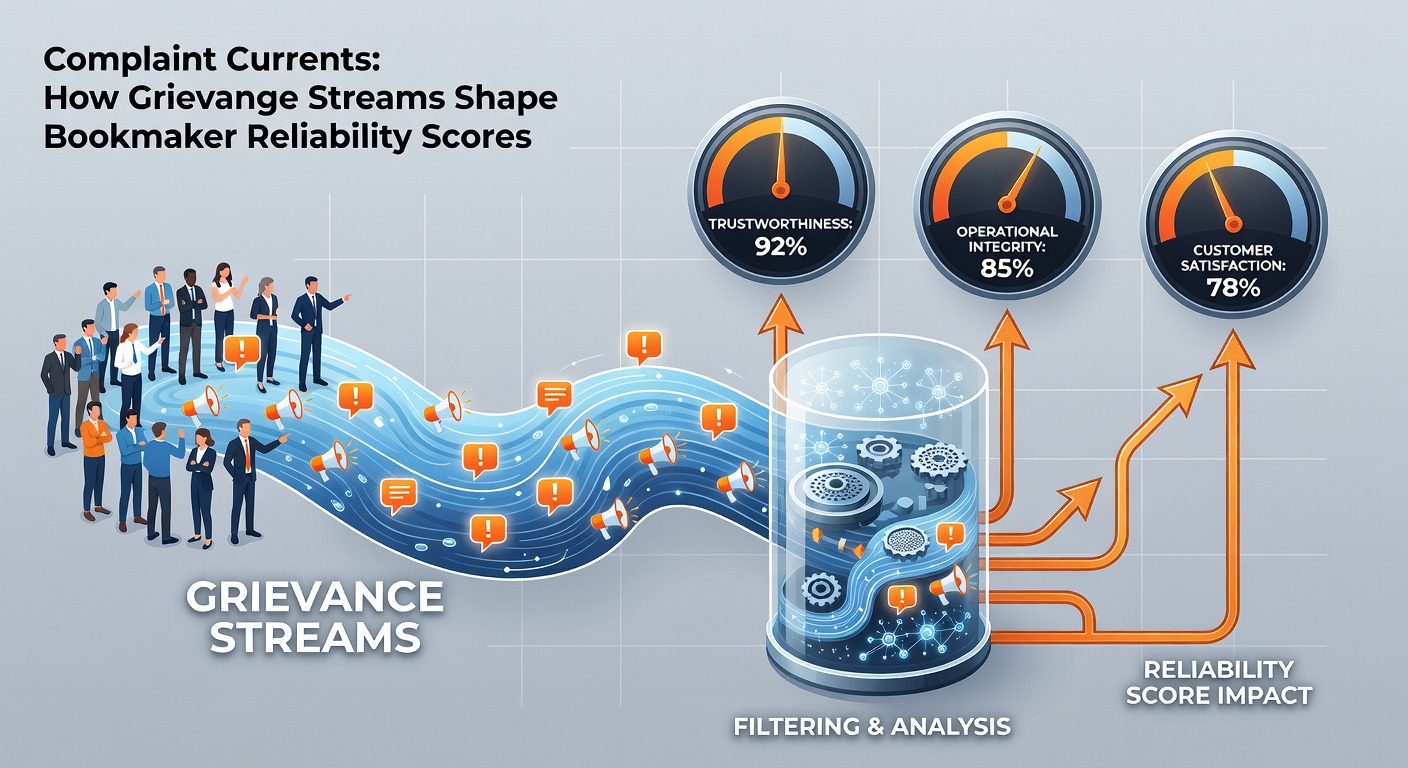
Case Studies: Currents in Action
Consider Operator A, a veteran in the EU market, where a 2025 stream of 1,200 geoblock complaints—stemming from mismatched IP checks—sliced its reliability score by 25%; the fix came swiftly via partnerships with verification firms, restoring 80% of lost points in two months, a turnaround researchers cite as a model for current management. Contrast that with Operator B in Canada, whose refusal to budge on high-roller withdrawal caps ignited a prolonged grievance flood, dropping scores to sub-5 levels and inviting provincial scrutiny.
People who've analyzed these sagas often discover that public apologies paired with compensation schemes halt the flow faster than legal battles ever could; data from provincial bodies backs this, showing resolved cases correlate with 40% fewer repeat filings. And in one standout instance, an Australian operator flipped a negative current by launching a dedicated complaint portal, boosting its score while rivals sank amid silence.
It's noteworthy how these stories ripple globally, informing scorers from Nevada to New South Wales; for deeper dives, reports from the New Jersey Division of Gaming Enforcement detail similar US patterns, where complaint resolutions directly tie to licensing renewals.
Regulatory Ripples and Player Tools
Regulators worldwide harness these currents not just for enforcement but for industry-wide nudges; in the US, state boards mandate quarterly grievance disclosures, feeding into public scorecards that bettors check before depositing. Australia takes it further with mandatory ADR schemes, where unresolved streams trigger fines scaling to 1% of gross revenue, a deterrent that keeps top bookmakers vigilant.
But the real power shifts to players armed with aggregator apps that visualize currents in real-time, flagging red zones like bonus trap spikes; those using these tools report 60% fewer bad experiences, per user surveys. So while bookmakers scramble to dam the streams, bettors navigate by the scores they shape, a dynamic that's only intensifying as AI parses grievance sentiment for finer predictions.
Yet, challenges persist: anonymous forum rants sometimes inflate currents artificially, prompting scorers to verify via multi-source triangulation; this refinement, rolled out in late 2025, has stabilized ratings amid the noise.
Conclusion
Grievance streams ultimately dictate bookmaker reliability like a river carving canyons, eroding weak spots while elevating the responsive; data underscores that operators mastering these currents—through swift resolutions and open channels—not only safeguard scores but build lasting trust. As March 2026 complaints hint at seasonal surges ahead, the lesson stands clear: in betting's fast waters, ignoring the current means getting swept under. Bettors, meanwhile, hold the map via updated scores, steering clear of turbulence with eyes wide open.