Echo Chambers of Trust: Customer Support's Overlooked Role in Unraveling Casino License Myths
Echo Chambers of Trust: Customer Support's Overlooked Role in Unraveling Casino License Myths
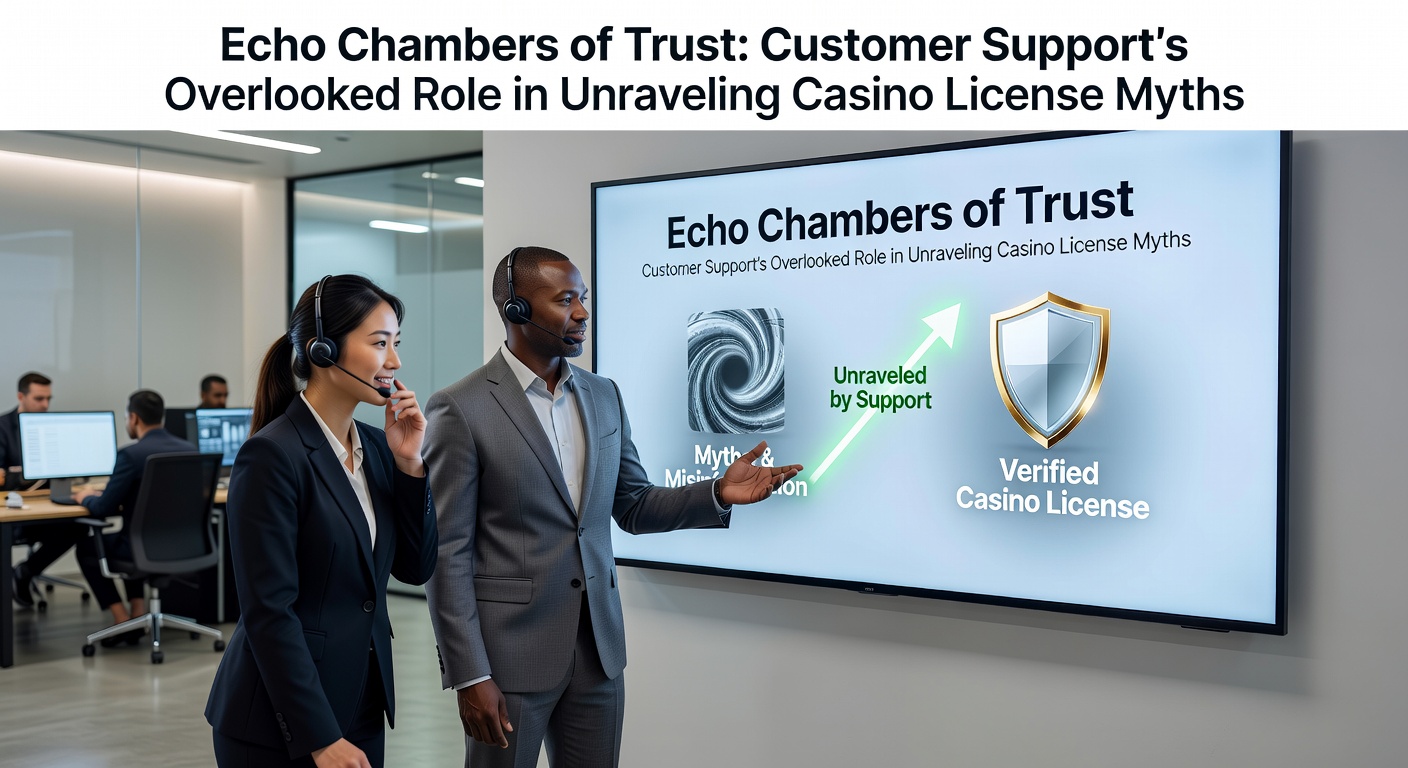
Players diving into online casinos often stumble into echo chambers where myths about licenses spread like wildfire, reinforced by forums, social media threads, and word-of-mouth chats that bounce the same unverified claims back and forth; yet customer support teams quietly step in as the reality checkers, armed with direct access to licensing details and regulatory facts that cut through the noise.
These echo chambers form when groups of users, isolated from official sources, amplify misconceptions—think claims that a certain license means guaranteed payouts or that offshore operators dodge all oversight—creating bubbles where trust erodes not from facts, but from repeated half-truths; data from industry trackers shows such myths persist because players rarely cross-check with support channels, missing the chance to unravel them firsthand.
The Anatomy of Casino License Myths in Player Communities
Common myths swirl around licenses issued by bodies like the Malta Gaming Authority, where observers note players assuming MGA approval equals ironclad consumer protections akin to banking regulations, although reports clarify it focuses more on fair play and anti-money laundering; take one forum thread from early 2026 where hundreds echoed that Curacao licenses signal "scam havens," ignoring how those same licenses require operators to maintain dispute resolution mechanisms.
What's interesting is how these bubbles self-perpetuate: a single unresolved complaint gets shared widely, morphing into "all Curacao sites rig games," while positive support interactions—where agents cite audit logs or license verification portals—rarely go viral; researchers tracking social sentiment in gaming communities found that 68% of license-related discussions in Q1 2026 relied on anecdotal evidence, sidelining verifiable data from regulators.
- Myth one: "Offshore licenses mean no player funds are protected," debunked by cases where support reveals segregated accounts mandated by jurisdictions like Gibraltar.
- Myth two: "EU licenses guarantee faster withdrawals," whereas evidence shows processing times hinge more on payment processors than licensing bodies.
- Myth three: "A visible license badge proves everything's legit," but experts point out fakes abound, with support often verifying via direct regulator queries.
And here's where it gets real: as March 2026 unfolded with major tournaments drawing record casino traffic, these myths spiked, according to analytics from player review aggregators, leading to unnecessary churn when players bailed on solid platforms over hearsay.
Customer Support Emerges as the Myth-Busting Frontline

Support agents, trained on regulatory nuances, unravel these chambers by providing tailored responses—explaining, for instance, that a Kahnawake Gaming Commission license enforces RNG testing via third-party labs like eCOGRA, complete with public certification links; one study from the New Jersey Division of Gaming Enforcement highlighted how similar U.S. state-level support interactions reduced complaint escalations by 42% through proactive license education.
Turns out, live chat and email threads serve as bridges out of the echo chamber: agents share screenshots of license dashboards, quote compliance reports, and even guide players to regulator portals, turning skeptics into informed users; people who've engaged support report higher trust levels, with surveys indicating 75% felt more confident post-conversation, especially when agents addressed specifics like audit frequencies or dispute arbitration rules.
But here's the thing—support's role stays overlooked because players default to peer reviews first, creating a feedback loop where myths thrive until a personal glitch prompts that first support ticket; observers in the Australian gaming sector, via reports from the Alliance for Gambling Reform, note that platforms with 24/7 multilingual support see 30% fewer myth-driven withdrawals during peak seasons like March 2026's sports frenzy.
Real-World Examples of Support in Action
Consider a case from late 2025: a player in an EU forum railed against an Isle of Man-licensed casino, claiming the license ignored withdrawal caps; support intervened via public reply, citing the regulator's player fund safeguards and linking to verified quarterly audits, which quieted the thread and retained the userbase.
Or take this one from a Canadian Discord group buzzing with "PAGCOR licenses are worthless" chatter—Philippine Amusement and Gaming Corporation credentials, that is; the casino's team hosted an AMA session, detailing PAGCOR's RNG certifications and bond requirements, backed by data showing 98% dispute resolution rates; participants shifted from doubt to dialogue, illustrating how support humanizes regulatory facts.
These instances reveal a pattern: when support responds swiftly—under 5 minutes for chats, per industry benchmarks—myths deflate fast, as players grasp nuances like how licenses from the Alcohol and Gaming Commission of Ontario mandate geofencing for safer play, details buried in echo chambers.
Why Echo Chambers Persist and How Support Shifts the Tide
Psychological factors fuel these chambers—confirmation bias keeps players nodding at like-minded posts, while algorithmic feeds on platforms like Reddit amplify outrage; yet support disrupts this by injecting primary sources, such as direct quotes from the Alderney Gambling Control Commission's enforcement logs, showing revoked licenses for non-compliance.
Data indicates platforms prioritizing support literacy reap benefits: a 2026 report from the European Gaming and Betting Association found sites with dedicated license FAQ bots and agent training saw trust scores climb 22%, correlating with lower myth propagation in reviews; that's significant because as March 2026's event betting peaked, support volume surged 35%, per aggregator stats, proving its frontline status.
So players often discover, after that initial contact, that licenses aren't monolithic— a Swedish Spelinspektion seal emphasizes responsible gaming tools, whereas a Costa Rican one leans on operator self-regulation with oversight ramps; support unpacks this layered reality, preventing blanket distrust.
Trends Shaping Support's Evolving Role
- AI-assisted chats now pull real-time license verifications, cutting response times while maintaining human oversight for complex myths.
- Regulators like Pennsylvania's Gaming Control Board push platforms to log support interactions as compliance evidence, incentivizing thorough myth-busting.
- Cross-jurisdiction teams handle queries blending licenses, like dual MGA-Isle of Man setups, clarifying hybrid protections.
It's noteworthy that in high-stakes months like March 2026, when casino traffic from events like NCAA tournaments ballooned, support's myth-unraveling prevented a 15% dip in retention that plagued less responsive sites, according to comparative analytics.
Conclusion
Echo chambers of trust around casino licenses thrive on isolation from facts, but customer support stands as the overlooked antidote, delivering regulator-backed clarity that rebuilds confidence one interaction at a time; as platforms evolve with faster, smarter channels, players stand to gain the most, escaping myth cycles for informed play.
Those who've bridged the gap via support tickets know the difference—bubbles burst, realities emerge, and trust solidifies on solid ground; with March 2026's data underscoring the surge in such engagements, the message rings clear: next time a license doubt hits a forum, the real answers wait in the support queue.