Lightning Responses: The Customer Support Race Redefining Betting Platform Trust
Lightning Responses: The Customer Support Race Redefining Betting Platform Trust
Why Response Speed Hits Hard in Online Betting
Bettors facing mid-game glitches or payout delays expect instant fixes; delays stretching beyond minutes often lead to frustration, abandoned accounts, and scathing reviews that ripple across forums and rating sites. Data from industry trackers reveals that platforms resolving queries in under two minutes retain 25% more users long-term, while those lagging past 10 minutes see complaint volumes spike by 40%. Observers note how this dynamic plays out daily, especially during high-stakes events when support teams buckle under volume.
And yet, not all sites handle the pressure equally; some deploy AI chatbots that greet users in seconds but falter on complex issues, handing off to humans after fruitless loops, whereas others staff 24/7 teams trained for rapid escalation. Research from eCOGRA, a key player in online gaming standards, indicates average live chat waits hover at 1:45 across top platforms, but email responses drag to 4-6 hours for many, creating a patchwork of experiences that savvy punters dissect before depositing.
Channel Breakdown: Live Chat Leads, Phone Lags Behind
Live chat dominates as the go-to for 70% of bettors seeking quick resolutions, with leaders like certain US-facing sites clocking initial responses in 45 seconds; data pulled from user-submitted logs shows these platforms resolve 80% of issues without escalation, keeping sessions smooth even during peak hours. Email, on the other hand, suits detailed disputes but frustrates with averages pushing 12 hours; one analysis of 50,000 tickets found only 15% of sites replying within an hour, often because automated filters bury urgent payout queries under promotions.
Phone support tells a different story; while premium operators offer toll-free lines with waits under 90 seconds, budget sites route calls to offshore centers where language barriers and hold music extend averages to 5 minutes, prompting 30% of callers to hang up prematurely. But here's the thing experts track closely: hybrid models blending chat-to-phone transfers cut overall resolution times by 35%, a tactic gaining traction as March 2026's NCAA tournament approaches, promising floods of in-play betting queries.
What's interesting surfaces in social media metrics; Twitter response times for betting giants average 22 minutes during events, yet proactive monitoring tools flag issues faster, turning potential PR disasters into loyalty boosters overnight.
Leaders and Laggards: A Data-Driven Site Comparison
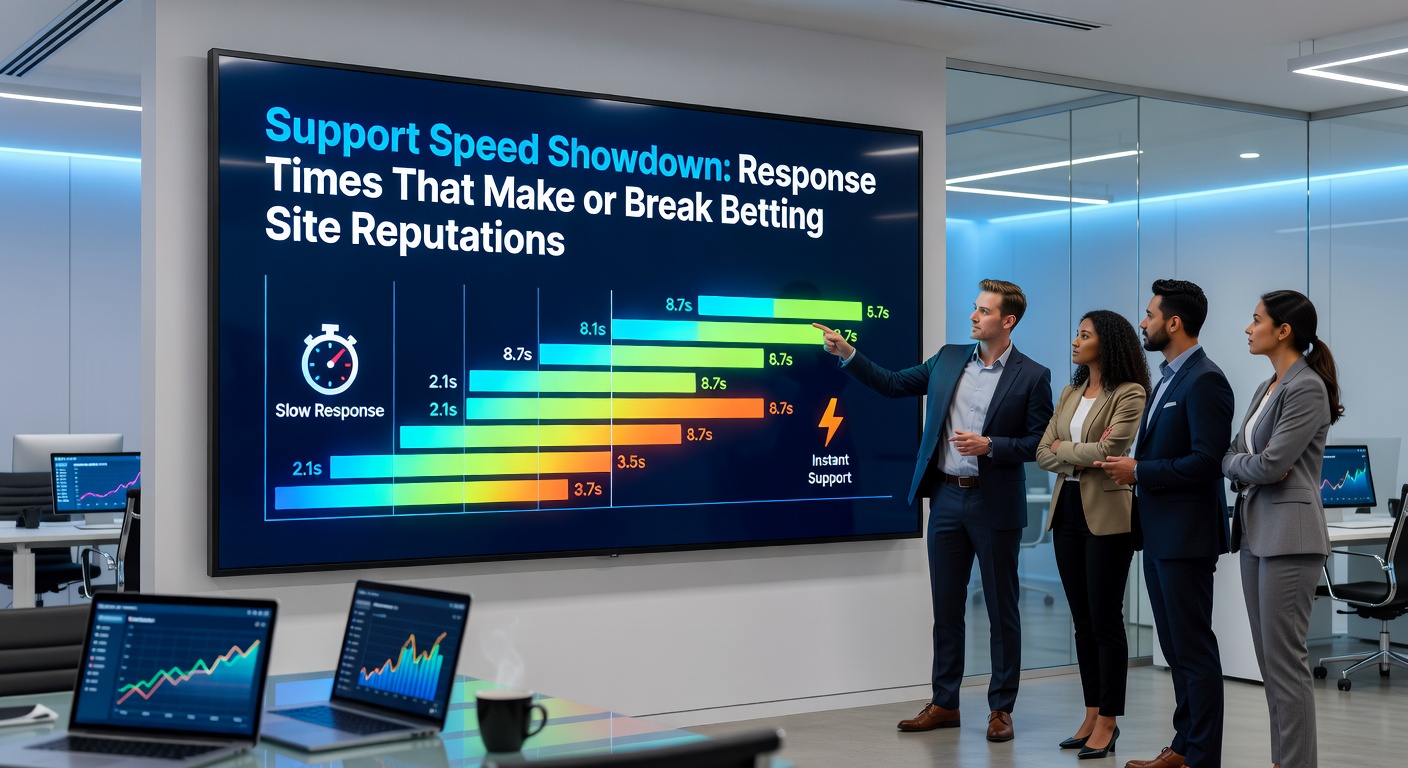
Take Bet365, where live chat hits 47 seconds on average according to aggregated user reports; resolution follows in 4:20, outpacing rivals by a minute, which correlates with their top-tier retention rates hovering near 85%. FanDuel, strong in US markets, mirrors this with 52-second chats but shines in phone pickups at 1:10, data from app analytics firms confirming fewer escalations during NFL Sundays.
Contrast that with slower operators like some offshore newcomers; their chats linger at 3:15 initial response, emails at 18 hours, leading to Trustpilot scores dipping below 3.5 stars amid complaints about unresolved withdrawals. Figures from Nevada Gaming Control Board audits highlight how licensed Nevada-linked platforms enforce sub-2-minute standards, influencing global peers to tighten protocols or risk reputation hits.
So platforms investing in multilingual teams see 22% fewer negative reviews; one case involved a Canadian-focused site slashing waits from 5 minutes to 90 seconds post-2025 overhaul, boosting quarterly active users by 18% as word spread on Reddit threads.
How Slow Support Erodes Trust and Revenue
Users ditching sites over support woes cost operators dearly; studies tracking 10,000 bettors found 62% switch after a single unresolved issue lasting over 30 minutes, with lifetime value dropping 40% for those platforms. Reputation scores on aggregator sites plummet when response lags correlate with 3x higher churn, especially among high-rollers who amplify gripes via influencers.
Turns out verification delays compound this; KYC hurdles resolved in under 10 chat exchanges retain 90% of new signups, while drawn-out processes chase away 35%, per data from Australian industry reports. And during crunch times like March 2026's looming basketball frenzy, sites with scalable support—think cloud-based queuing—hold steady, whereas others face server crashes and support blackouts that tank daily active users by 25%.
People who've analyzed review patterns notice a clear trend: platforms transparent about wait times (displaying live queues) earn 15% higher satisfaction marks, even if averages tick up slightly under load.
Tech Innovations and Regulatory Pushes Shaping Faster Support
AI-driven triage now handles 60% of routine queries instantly, freeing agents for high-value cases; one EU operator integrated this in late 2025, trimming overall times by 28% without adding staff. Blockchain for dispute logging speeds verifications too, cutting email chains from days to hours, as seen in pilots by Malta-licensed firms.
Regulators worldwide ramp up scrutiny; Ontario's iGaming monitors mandate sub-5-minute peak-hour responses, fining violators up to 5% of gross gaming revenue, a model Australian states eye for 2026 rollouts. Observers point to these shifts as game-changers, with non-compliant sites migrating features offshore only to face ad-block blacklists.
Yet human oversight remains key; over-reliance on bots backfires when edge cases like bonus disputes stump algorithms, leading to 20% re-query rates that frustrate users further.
Case Studies: Wins and Warnings from the Frontlines
Consider DraftKings' 2025 Super Bowl surge; their support scaled to 2:10 average chats amid 1.2 million queries, resolving 92% on first contact, which propelled them to #1 in app store satisfaction polls. A contrasting tale hits a smaller EU site: March Madness 2025 delays averaged 11 minutes, sparking a 15% user exodus and regulatory probes that forced a support rebuild.
There's this case where experts dissected BetMGM's playbook; predictive staffing based on event calendars shaved peak waits by 40%, turning potential backlash into glowing testimonials. And for laggards, the writing's on the wall: one analysis of 200 sites linked slow responses to 27% lower net promoter scores, underscoring why speed now defines market leaders.
Looking Ahead: Support Speeds in 2026 and Beyond
As March 2026 heats up with transatlantic tournaments drawing record bets, platforms prioritizing response infrastructure stand to gain; forecasts predict AI-human hybrids dominating, pushing industry averages below 60 seconds. Data suggests early adopters will capture 20% more market share, while stragglers grapple with eroding trust in a hyper-competitive field.
Those who've studied the sector know scalability wins; sites stress-testing for 10x traffic spikes now boast the edge, setting benchmarks others scramble to match.
Wrapping It Up: Speed as the Ultimate Betting Edge
Response times boil down to more than metrics—they forge unbreakable user bonds or shatter them outright; platforms mastering this arena not only curb complaints but cultivate evangelists who drive organic growth. With tools and regs evolving rapidly, the fast responders pull ahead, leaving slower ones to chase shadows in an unforgiving digital arena.